

You may think you have everything handled when planning a big concrete project, but then the rain starts. Do you stop and pause your efforts in case it significantly impacts the concrete pour? Or do you continue on? Our team at GFP Mobile Mix Supply is here with the best advice and the best concrete products.
When water is in the equation, there can be serious problems with your concrete project, especially if it is not handled the right way. Pouring concrete in the rain is possible—but it requires proper planning, precautions, and a clear understanding of the risks.
When the weather won’t cooperate, you’ll want to team up with professionals. This is where we can come in. Read below to learn more.
The Problem With Rain and Fresh Concrete
The issue with concrete and rain is that there is a chemical reaction that can occur called hydration. When this happens, the cement particles react with the water, which creates a crystalline bond. This bond can affect the water-to-cement ratio. This ratio is very important because if interfered with, it can determine how strong or durable the concrete is after it dries.
How Rain Disrupts the Curing Process
When rain gets involved, the initial ratio of concrete and water gets skewed.
This can dilute the cement paste and create a weaker top layer that makes the concrete more likely to be damaged over time, rather than lasting a while longer. With rainwater mixed in, you’ll experience a surface that is softer and less resistant to rocks, foot traffic, and other sources of wear.
Also, rain can make your cement rougher and more uneven. With that top layer being weaker, it can cause scaling, pitting, dusting, flaking, and more. A weak surface is more susceptible to freeze-thaw cycles. Water can penetrate the porous surface, freeze, expand, and cause the concrete to crack and spall over time.
The good news is that a light drizzle of rain might not ruin your project if you act quickly, but heavy rainfall on unprotected, fresh concrete can be catastrophic. The entire slab could be compromised, leading to expensive fixes, updates, or even a complete replacement down the road.
Can You Pour a Concrete Slab in the Rain?
To answer this question, you’ll have to consider your specific concrete slab setup.
Is the slab on a large or flat surface? Is it for a patio or a foundation? Once you have your answers to these questions, you’ll be able to know how much surface damage your concrete slab can handle.
If you’re pouring for a large surface area, then this can provide a bigger target for raindrops, which can create thousands of small craters and weaken the entire top layer, which you don’t want. If it’s a smaller area, it may not be as affected by the rain.
Protecting Your Concrete Slab
If you’ve already poured a decent amount of concrete and then the rain comes, don’t worry. There are steps you can take to protect your concrete slab from seeing any rain damage. First, cover the area with a plastic sheet or waterproof tarp. This should help on a temporary level to keep the rain off.
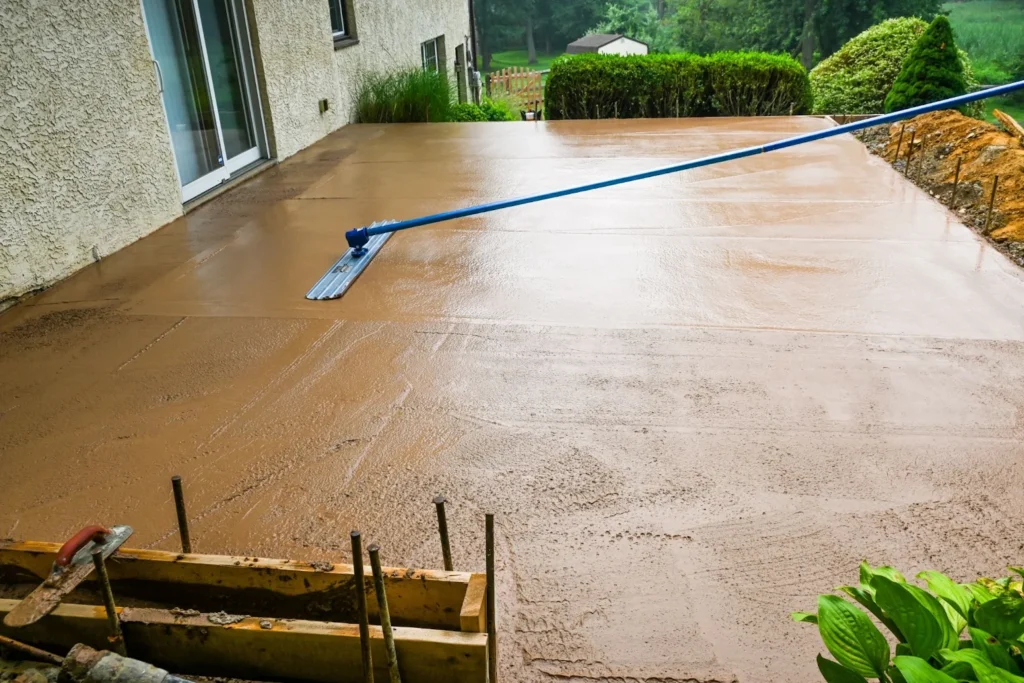
Then, get your crew to monitor the weather closely. If the rain passes quickly, you can get back to work, but be prepared to have to recover the area if the rain starts up again. Also, if water does get on the surface, professionals sometimes can use squeegees to push the excess water off the slab without disturbing the concrete.
These protective measures require planning, proper equipment, and a skilled team that can react quickly to changing conditions. For a DIY project, managing these variables can be overwhelming and lead to mistakes.
Why Professional Expertise is Crucial in Bad Weather
Pouring concrete may not seem like a complex job, but when bad weather is in the mix, having a reliable team of concrete professionals is essential. Our team knows more than just having the right mix. We can see through the entire process from start to finish, especially if there is a storm brewing.
With an expert concrete team on your side, you’re able to fully understand the science and how even the smallest adjustments can make a world of difference.
For example, using a lower-slump (drier) concrete mix is best if light rain is anticipated. This provides a small buffer, as the slightly stiffer mix can handle a minimal amount of moisture without becoming too weak.
Trust GFP Mobile Mix for a Perfect Pour, Rain or Shine
When you ask whether you can pour concrete in the rain, what you really want to know is how to make sure your project turns out right, even if the weather is not ideal.
The key is working with a team that knows how to manage those variables and protect your investment. At GFP Mobile Mix, we bring the experience to do exactly that, using advanced volumetric mixing trucks to produce fresh, high-quality concrete on-site with precise control over the mix.
Don’t let rain derail your plans when you have the right partner, and we are committed to delivering a durable, professional result you can feel confident about. Contact GFP Mobile Mix today to schedule your delivery and keep your project moving forward.