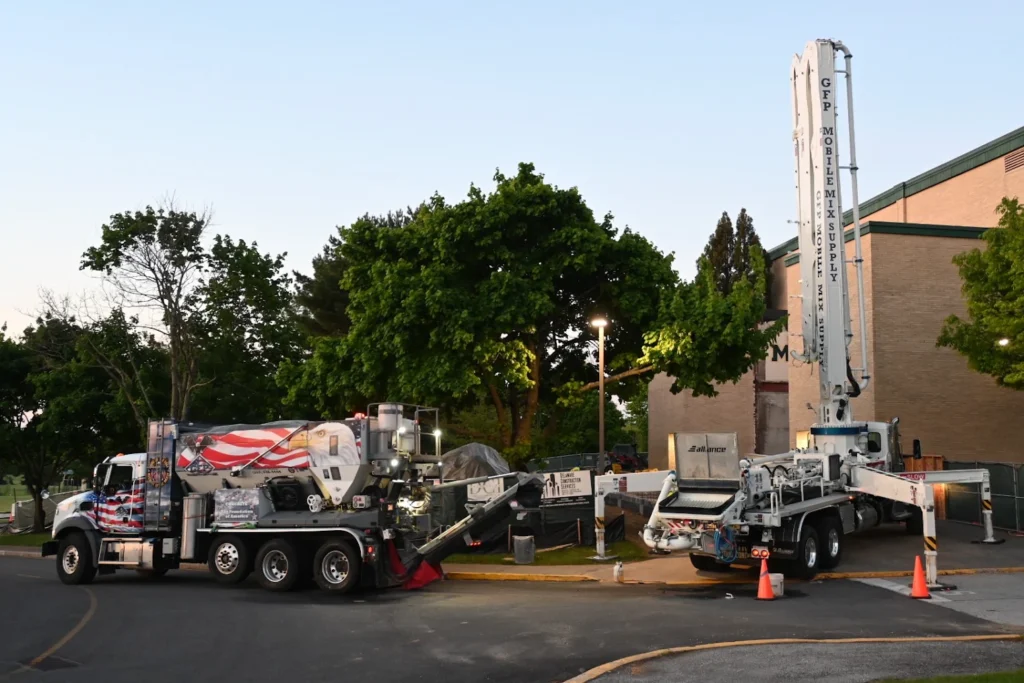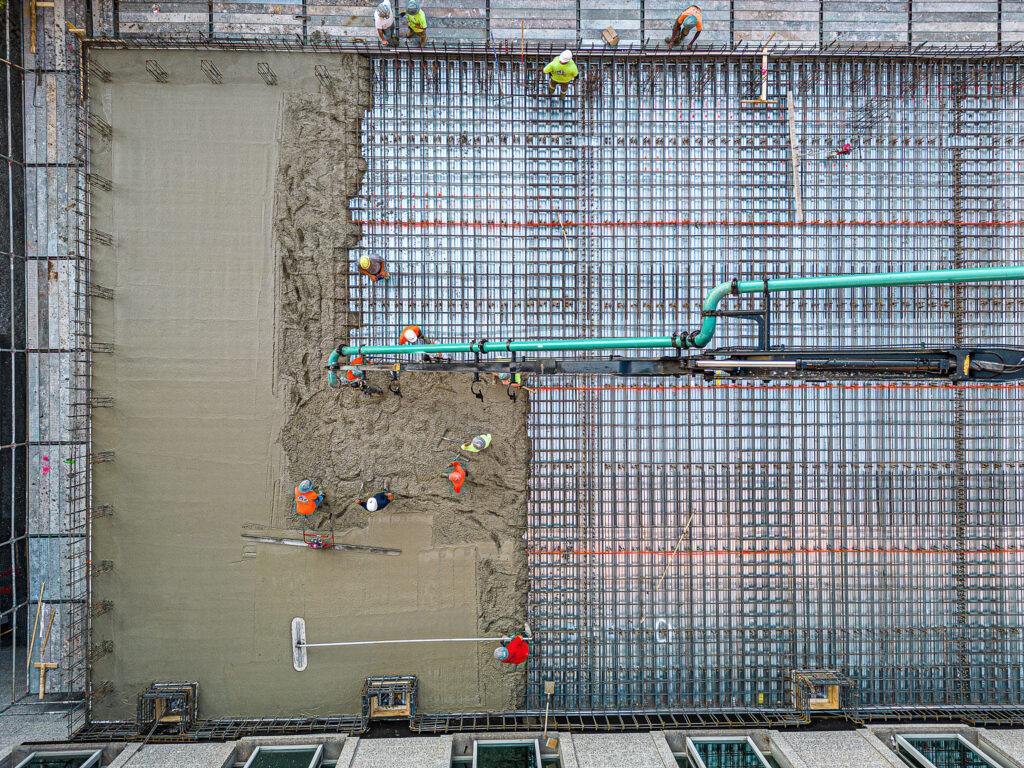
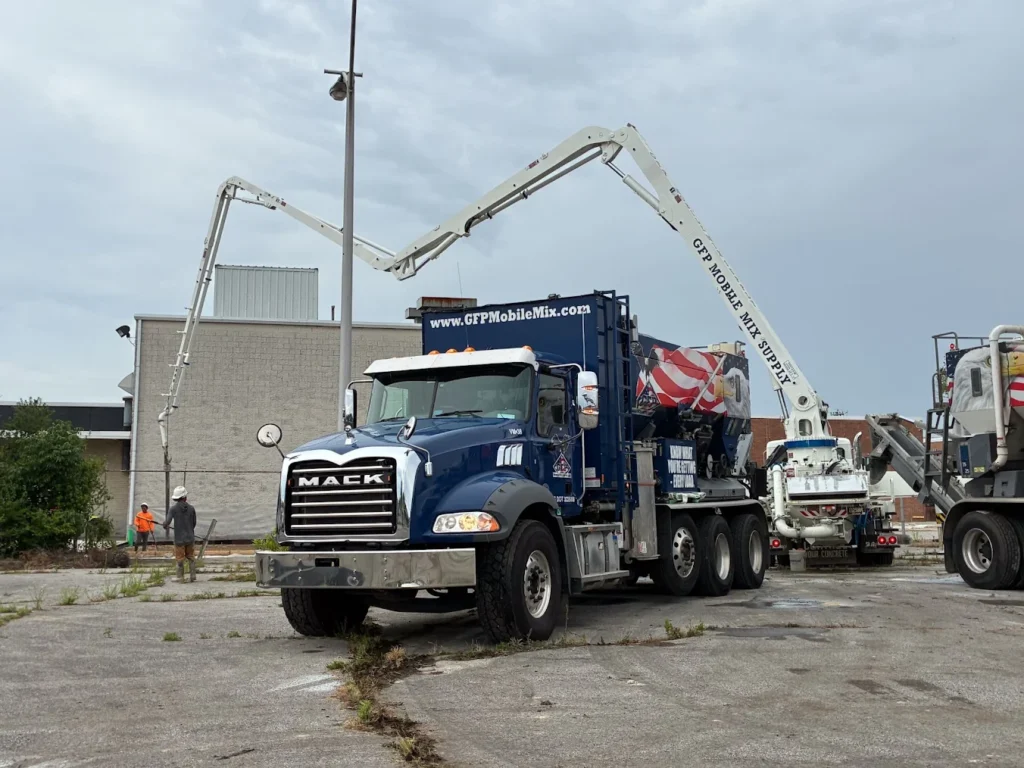
A concrete pump truck moves wet concrete from the truck to the exact spot where it needs to be poured. The concrete goes into a hopper, gets pushed through a hydraulic pumping system, and then travels through a long boom arm to the pour area. This makes it much easier to place concrete in hard-to-reach areas, at higher levels, or across large job sites.
Pouring concrete sounds pretty simple until you’re dealing with a second-story balcony, a backyard the truck can’t reach, or a muddy job site. That’s where a concrete pump truck can make a big difference. Instead of using wheelbarrows and a lot of manual labor to move heavy, wet concrete, the pump sends it directly where it’s needed.
If you’re a contractor or property owner planning a project, knowing how a concrete pump truck works can help you decide if it’s right for the job. In this guide, we’ll look at the main parts of a concrete pump truck, how they work together, and what happens once the pumping begins.
How Does a Concrete Pump Truck Work?
A concrete pump truck uses hydraulic pressure to move wet concrete from a hopper through pipes or hoses and out to the area where it’s being poured. The pump truck is usually positioned near the concrete mixer, which feeds the wet concrete into the hopper. From there, the hydraulic system pushes the concrete through the lines in a steady, controlled flow.
The biggest advantage of a pump truck is reach. A regular mixer truck can only pour where it can physically get to. A pump truck can move concrete over long distances, around obstacles, up several stories, or across rough and muddy ground. This makes it much easier to handle pours where a mixer truck simply can’t reach the work area.
There are two main types of concrete pump trucks: boom pumps and line pumps. Boom pumps use a long, movable arm to place concrete, making them a good choice for large jobs and elevated pours. Line pumps use flexible hoses that can reach through tight spaces, making them useful for indoor projects, narrow areas, and landscaped yards where a large boom truck may not be practical.
The Main Pieces of a Concrete Pump Truck
A concrete pump truck has three main parts that work together: the hopper, the pumping system, and the boom arm. Each part plays an important role in moving the concrete where it needs to go. Understanding how they work can also help explain why a pump truck can reach areas a standard mixer truck can’t.
What Does the Hopper Do?
The hopper is the part of the pump truck that receives the wet concrete. A mixer truck pours the concrete into the hopper, where it waits to be pulled into the pumping system. The hopper is built to handle a steady flow, so crews can keep adding concrete without stopping the pour.
GFP Mobile Mix Supply’s pump truck has a 600-liter (158-gallon) hopper with an easy-clean design and automatic lubrication to help keep everything running smoothly.
How Does the Pumping System Move Concrete?
Once the concrete reaches the hopper, the pumping system pushes it through a series of pipes or hoses using hydraulic pressure. An S-tube valve moves between two cylinders, helping create a steady flow instead of sending the concrete out in short bursts.
GFP Mobile Mix Supply’s pump can produce up to 164 cubic meters (215 cubic yards) of concrete per hour, with enough hydraulic pressure to move concrete over long distances and up to significant heights.
What Does the Boom Arm Do?
The boom arm is the long, folding arm that moves the concrete from the truck to the exact spot where it’s needed. It can reach over obstacles, around buildings, and up to higher levels, making difficult pours much easier.
GFP Mobile Mix Supply’s pump truck has a four-section boom with a horizontal reach of 33.1 meters (108’7″) and a vertical reach of 37.1 meters (121’9″). Operators control the boom with a wireless remote, giving them the ability to place concrete accurately even in tight or hard-to-reach areas.
What to Expect During the Concrete Pumping Process
Knowing what happens on pump day can help everyone stay prepared and keep the job moving. When the pump truck arrives, the operator positions it near the pour area and extends the outriggers to keep the truck stable. GFP Mobile Mix Supply’s truck uses an X-style outrigger system that can support a maximum load of 16,828 kg (37,100 lb).
Positioning the Boom
Once the truck is secure, the operator extends the boom and positions it over the area where the concrete will be placed. The boom can be adjusted as needed to reach around obstacles and get into the right position.
Pumping the Concrete
A mixer truck feeds wet concrete into the hopper, and the pumping system moves it through the boom and out to the pour location. The steady flow makes it easier for the crew to keep the pour consistent without having to move concrete by hand.
Plan for Enough Time
It’s also important to plan for the time needed to complete the job. Concrete pumping services, including GFP Mobile Mix Supply, typically have a minimum rental period of around four hours. This covers setup, pumping, and cleanup while keeping the service practical for both the crew and customer.
Choosing the Right Pump
The right pump depends on your project. A boom pump is a good choice for elevated pours, long-distance placement, and larger jobs. A line pump is often better for tight spaces, indoor areas, or landscaped yards where getting a large boom into position may be difficult.
Is a Concrete Pump Truck Right for Your Next Project?
A concrete pump truck can make a big difference when your job site is hard to reach, the pour is several stories up, or you’re working with a tight schedule. It can speed up the pour, and help place the concrete exactly where it needs to go.
If you’re not sure whether a boom pump or line pump is right for your project, GFP Mobile Mix Supply can help. Our team can go over your job site, availability, pricing, and the best setup for the job. Call (302) 828-4444 to get your concrete pour scheduled.